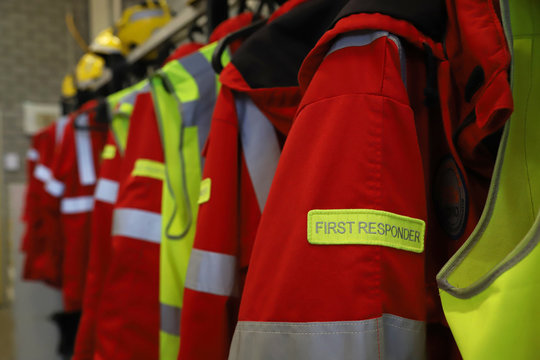
First responders arrive at therapy from very different starting points. Some are a week out from a call that has not stopped replaying. Some have been managing a slow accumulation for years and have only recently connected the broken sleep, the short temper at home and the extra drinking to the work itself. Others are already off, with a claim open and a return-to-work conversation ahead of them. What kind of support fits depends less on how long it has been going on than on whether a specific incident is driving it, how much of ordinary life it is taking up, and whether the question in front of you is clinical, occupational or both.
The Cognitive & Interpersonal Therapy Centre (CITC) provides therapy for first responders in person in Midtown Toronto and virtually throughout Ontario, through a service led by Dr. Niki Fitzgerald, a Clinical Psychologist who spent close to 20 years assessing and treating people injured at the workplace. This article sets out what operational stress tends to look like early, which treatments are used for post-traumatic stress, how the WSIB process sits around treatment, and what is worth establishing about a clinician before booking.
If you or someone you know is in crisis in Canada, call or text 9-8-8 for 24/7 suicide crisis support. If there is immediate danger, call 911 or go to the nearest emergency department.
What Operational Stress Looks Like Before It Is Called PTSD
Operational stress usually shows up in sleep, temper and withdrawal long before anyone involved uses the word trauma. The presentations that bring first responders into therapy are often unremarkable on their own, and easy to attribute to a bad run of shifts.
- Broken sleep, early waking, or dreams that return to a particular call
- Irritability at home that does not appear at work
- Hypervigilance and difficulty settling when off duty
- Emotional flatness, or a sense of operating at a distance from everyone else
- Avoidance of a route, a station or a type of call
- Increased alcohol use
- Loss of interest in parts of the job that used to be satisfying
None of these are rare in this population. In a study of Canadian public safety personnel published by Carleton and colleagues in the Canadian Journal of Psychiatry in 2018, 15.1 per cent of participants screened positive for symptoms consistent with one mental disorder and a further 26.7 per cent screened positive for two or more. A positive screen is not a diagnosis. It indicates that the question is worth examining properly rather than settling it informally.
If several of these have been running for weeks rather than days, a conversation with CITC’s Clinical Coordinator is a reasonable first step and does not commit you to treatment.
Starting Treatment Before, During or After Time Off Work
There is no requirement to be off work, or to have a claim open, before starting therapy. Dr. Fitzgerald works with first responders across that whole range: people recovering from an injury sustained in the course of the job and working towards some form of return, and people who remain on full duties and want regular check-ins to stay well across a long career.
The earlier conversation is usually the smaller undertaking. Treatment begun while someone is still functioning tends to involve fewer sessions and leaves more options open about hours and duties than treatment begun after an absence has already started. CITC does not apply a threshold of severity before booking an appointment.
What CPT, Prolonged Exposure and the Related Approaches Involve
Trauma-focused cognitive behavioural therapies are the most established treatments for post-traumatic stress in adults. The 2023 VA/DoD Clinical Practice Guideline for PTSD, a United States guideline widely referenced in North American practice, recommends three individual trauma-focused psychotherapies as first-line treatment: Prolonged Exposure, Cognitive Processing Therapy and Eye Movement Desensitization and Reprocessing (EMDR).
Dr. Fitzgerald works from a cognitive behavioural basis and tailors treatment to the person rather than to the diagnosis. Depending on what is presenting, that may draw on the following.
- Cognitive Processing Therapy (CPT): A structured trauma-focused therapy that works on the conclusions a person has drawn from an incident, particularly beliefs about blame, danger and their own judgement.
- Prolonged Exposure: A graded approach to trauma memories and avoided situations, so that the memory can be recalled deliberately rather than intruding unbidden.
- Cognitive Behavioural Therapy (CBT): Work on the relationship between thought, feeling and behaviour, including the avoidance that maintains most anxiety presentations. This is the starting point for most of Dr. Fitzgerald’s work.
- Acceptance and Commitment Therapy (ACT): Often used where the aim is to resume the activities that matter while a symptom is still present, rather than to remove the symptom first.
- Dialectical Behavioural Therapy (DBT): Elements are used where emotional regulation, distress tolerance or interpersonal strain are the more pressing difficulties.
- Behavioural Activation: A practical approach to low mood that rebuilds activity first and treats motivation as something that follows rather than precedes it.
- Interpersonal Psychotherapy (IPT): Focused on relationships and role change, which is frequently where the cost of a long absence from work actually registers.
One point of attribution is worth stating, because EMDR appears in the guideline above. At CITC, EMDR is provided by one clinician, Medina Ismayilova, a Registered Psychotherapist. Dr. Fitzgerald’s trauma work uses the cognitive behavioural approaches listed here. There is further detail on how the three named protocols differ in CITC’s article on trauma and PTSD therapy in Toronto, and the Clinical Coordinator can say which is the appropriate match at the point of enquiry.
How WSIB Treats Psychological Injury, and What the First Responder Presumption Changes
The Workplace Safety and Insurance Board (WSIB) can fund psychological assessment and treatment where a mental health condition is accepted as work-related, and the test for first responders is not the same as for everyone else. According to the WSIB’s published criteria for chronic and traumatic mental stress claims, a claim is approved where three conditions are met: there is a mental health diagnosis made by a qualified health professional, the predominant cause of that diagnosis was exposure to a substantial work-related stressor or traumatic event, and the diagnosis results in chronic or traumatic mental stress.
For first responders there is also a presumption specific to post-traumatic stress disorder. The WSIB states that PTSD in a first responder is presumed to be work-related where the person worked as a first responder for at least one day on or after 6 April 2014, the diagnosis was made on or after that date and within 24 months of their last day in the role, and the diagnosis was made by a psychologist or psychiatrist using the DSM-5.
Two things follow from that. First, the designation of the clinician matters in a way it does not for ordinary therapy, because a psychologist or psychiatrist has to make the qualifying diagnosis. A psychotherapist, whatever their skill with the presentation, cannot. Second, WSIB and not the clinic determines eligibility. CITC accepts eligible WSIB referrals and Dr. Fitzgerald is one of the clinicians who sees them, but no clinic can promise how a claim will be decided. CITC also does not accept HCAI clients and holds no HCAI registration, so a motor vehicle accident claim routed through that system is handled elsewhere. The Clinical Coordinator can establish which funding route applies before anything is booked.
Functional Assessment, Restrictions and Return-to-Work Planning
Return to work is usually the longest part of a psychological injury and the part that receives the least clinical attention. Dr. Fitzgerald spent close to two decades at a WSIB-affiliated mental health specialty program through the Centre for Addiction and Mental Health, conducting comprehensive assessments and providing treatment for people injured at work. In recent years approximately half of that caseload has been first responders.
That work involves three things the therapy hour on its own does not. Functional assessment describes what a person can currently do, rather than what they have been diagnosed with. The development of workplace restrictions turns that description into something an employer can act on. Return-to-work planning covers the sequence itself, including graduated hours and modified duties. For a first responder the question is rarely whether someone can work at all. It is more often which calls, on which unit, at which point in the recovery.
Anyone currently inside that process is better off raising it at the first appointment than after a plan has been set.
What to Establish About a Clinician Before Booking
The questions that matter are about fit and scope rather than reputation. Five are worth putting to any clinician under consideration.
- Designation, and what it permits. In Ontario a formal psychological diagnosis sits within the scope of a Clinical Psychologist, which matters if a diagnosis is needed for a claim or a workplace accommodation.
- Familiarity with the work. Shift rotation, critical incident protocols, peer support, the culture around disclosure and the particular weight of an officer-involved incident should not need explaining from scratch.
- Experience inside the WSIB process. Writing restrictions and contributing to a return-to-work plan is a different skill from treating the symptoms.
- Which trauma protocols are actually delivered. A clinician who names specific treatments is easier to assess than one who describes a general orientation.
- What the clinician does not take on. A clear exclusion is a better sign than a claim to treat everything.
CITC’s Clinical Coordinator can answer all five about any clinician on the roster before a first appointment is booked.
Therapy for First Responders at CITC
CITC’s first responder service is led by Dr. Niki Fitzgerald, a Clinical Psychologist registered with the College of Psychologists and Behaviour Analysts of Ontario. She has more than 15 years of clinical experience and close to 20 years of assessment and treatment work with people injured at the workplace, through a WSIB-affiliated specialty program at the Centre for Addiction and Mental Health.
Her familiarity with the population is applied as well as clinical. She served as a clinical facilitator for the Road to Mental Readiness (R2MR) program with York Region and Peel Region EMS, has completed a ride-along with Peterborough services, attends the First Responders Mental Health Conference in Mississauga annually, and attended the Canadian Institute for Public Safety Research and Treatment (CIPSRT) in 2024.
Appointments are available in person at 20 Eglinton Avenue West, Suite 1007, in Midtown Toronto near Yonge and Eglinton, and virtually throughout Ontario. An initial appointment with a Clinical Psychologist at Dr. Fitzgerald’s level is 75 minutes at $415, and subsequent sessions are 60 minutes at $300. Therapy is not covered by OHIP. CITC direct bills participating TELUS Health eClaims payers, Sun Life and Medavie Blue Cross where the plan and the provider designation are eligible, and CITC receipts can be submitted to an insurer where direct billing does not apply. Eligible WSIB referrals are accepted.
One exclusion applies. Dr. Fitzgerald does not take referrals where substance dependence is the primary presenting concern, and the Clinical Coordinator can discuss what would be more appropriate in that case. CITC does not publish fixed wait times, because availability depends on which clinician is the right match and what is open when you call. That is established during the first phone call rather than estimated here.
Questions First Responders Ask Before Starting Therapy
Will my service or my employer be told that I am in therapy?
What is shared outside the session depends on your consent and on the funding route. Where treatment is funded through an accepted WSIB claim, reporting obligations come with the claim and are explained before treatment begins. Where you are paying privately or through an extended health plan, what an employer is told is a separate question and is worth raising directly at the first appointment.
Can I see Dr. Fitzgerald if I work outside the Toronto area?
Yes, provided you are in Ontario. CITC delivers appointments virtually throughout the province and in person at the Midtown Toronto office, which matters for anyone working rotating shifts outside the city.
Does OHIP pay for psychological treatment after a work-related incident?
No. Psychological services in private practice are not covered by OHIP. The usual routes are an accepted WSIB claim, an extended health benefits plan, or paying directly, and some people use a combination over the course of treatment.
What happens at a first appointment?
Before booking there is a brief complimentary phone call with CITC’s Clinical Coordinator to understand what you are looking for and to match you to a clinician. The first appointment is 75 minutes and covers history, current difficulties and what you want out of treatment, rather than a detailed account of the worst incident.
Do I need a diagnosis before I book?
No. A diagnosis is something assessment may produce, not a precondition for starting. If a formal diagnosis is required for a claim or an accommodation, that is a specific piece of work to raise at the outset, and an assessment answers the referral question rather than guaranteeing any particular conclusion.
What if alcohol has become part of how I cope?
It depends where it sits in the picture. Increased drinking alongside post-traumatic stress is common and can be addressed within trauma treatment. Where substance dependence is the primary presenting concern, Dr. Fitzgerald does not accept the referral, and the Clinical Coordinator can talk through what would be more appropriate.
Where to Start
The first step is a phone call rather than a commitment. CITC’s Clinical Coordinator can say whether Dr. Fitzgerald is the right match, what a WSIB pathway would involve in your case, and what is currently open, for appointments in person in Midtown Toronto or virtually anywhere in Ontario.
